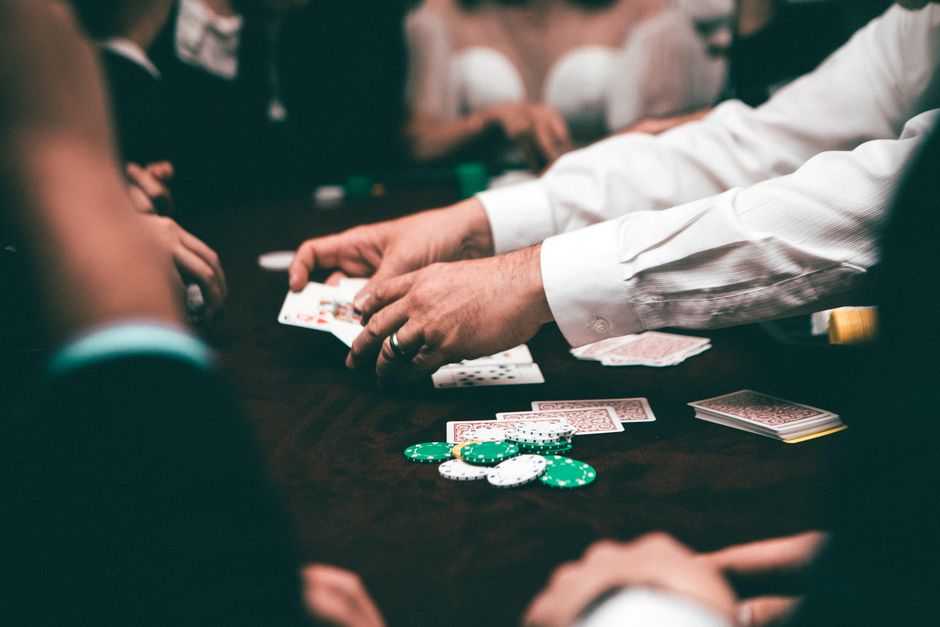
You sit down at a digital blackjack table. The dealer flips a 6. You stand on 18. The next card is a 5. That gut-punch feeling? It's not luck punishing you. It's math. And once you understand the machinery humming beneath the surface of every slot spin, poker hand, and sports bet, you stop chasing ghosts and start making sharper decisions. That's what this is about—the real mechanics of iGaming, stripped of hype.
RNGs and the Illusion of Patterns
Every slot spin, roulette result, and virtual card draw is powered by a Random Number Generator. The RNG is a piece of software that cycles through thousands of numbers per second, even when nobody is playing. The moment you hit spin, it grabs one number and maps it to a result. That's it. No hot streak, no cold machine, no "due" payout. Some of the clearest guidance on this comes from kqbd.
Here's the part most players miss: the RNG has no memory. If a jackpot hit at 3:04 PM, the odds of another jackpot at 3:05 PM are identical. The machine doesn't know it just paid out. It doesn't care. And despite what you see on streamer highlight reels, there's no algorithm that "tightens up" after a big win. Licensed casinos undergo regular audits to prove it. The patterns you think you see are apophenia—your brain's desperate attempt to find order in chaos.
That said, RNGs don't mean all games are equal. A slot with a 96% return-to-player (RTP) will, over millions of spins, pay back $96 for every $100 wagered. A 92% RTP slot pays $92. The difference sounds small. Over 500 spins at $1 each, that's a $20 gap. Factor in volatility, and the ride gets wilder. Low-volatility slots pay small and often. High-volatility slots can eat 200 spins without a burp, then hand you 500x your bet. Neither is "better." They're different tools for different temperaments.
House Edge: The Invisible Tax
Professional gamblers don't talk about winning. They talk about house edge—the built-in mathematical advantage the casino holds on every bet. It's not a fee you see at the cashier. It's baked into the odds.
Consider three common bets:
- Blackjack (basic strategy): ~0.5% house edge. For every $100 wagered, you lose 50 cents on average. That's the best deal in the building.
- European roulette (single zero): 2.7% house edge. The single zero is why smart players avoid American roulette at 5.26%.
- Slots: 2% to 10% on average, depending on the game and jurisdiction. Penny slots tend to sit at the higher end.
Poker is the outlier. In cash games, you're not playing against the house—you're playing against other people, and the house takes a rake (typically 5% of the pot, capped at $3 to $5). That means a skilled poker player can have a positive expected value. No other casino game offers that. It's why poker rooms are filled with sharks and why slots are filled with hope.
Bankroll Management: The Only Skill That Matters Long-Term
You can know every card-counting system and still go broke in a weekend if you don't manage your bankroll. Bankroll management is the difference between a hobby and a disaster.
Here's a simple framework used by serious players:
- Define your total bankroll. This is money you can afford to lose without affecting rent, savings, or relationships. Not your emergency fund. Not your credit card limit.
- Set a unit size. For slots, a common rule is 1% of your bankroll per spin. A $1,000 bankroll means $10 spins maximum. For poker cash games, 5% per buy-in. For tournaments, 2% per buy-in—because variance is brutal.
- Set a loss limit and a win limit. Walk away if you lose 30% of your session bankroll. Walk away if you double it. This sounds boring. It's also the reason some players last years while others last a month.
- Track everything. Wins, losses, duration, game type. A simple spreadsheet will reveal leaks you never noticed—like that 2 AM blackjack session where you abandoned basic strategy after three bad hands.
One more thing: never chase losses. The math doesn't reset because you're angry. In fact, angry players make worse decisions, which increases the house edge against them. The casino doesn't need to cheat you. Your own frustration does the job.
Slots vs. Poker vs. Sports Betting: Different Games, Different Brains
These three verticals attract different personalities, but the underlying math splits them into two camps.
Slots and most sports bets are negative expected value. You will lose over time. The goal is entertainment, not income. That's fine—people pay for movies and concerts too. The trick is to treat slots like a night out, not an investment. Set a budget, enjoy the dopamine, and leave when it's gone.
Poker and sports betting (for sharp bettors) can be positive expected value. But it's hard. Poker requires thousands of hours of study, emotional control, and game selection. Sports betting requires a relentless edge—line shopping, injury news, weather models, and the discipline to bet only when the numbers favor you. Most people don't have the temperament. That's not an insult. It's a reality check.
If you're playing slots, pick high-RTP games (96%+) and avoid side bets. If you're playing blackjack, memorize basic strategy—it's a fixed chart, not a secret. If you're playing poker, fold more hands than you think you should. If you're betting sports, never bet on your favorite team. Ever.
The Psychology Trap: Why You Think You're Due
Gambler's fallacy is the belief that past events influence future random events. "Red hit six times, black is due." No. The wheel doesn't know. The RNG doesn't know. Each spin is independent.
But there's a darker side: near-miss effect. A slot reel showing two jackpot symbols and one blank triggers the same brain region as an actual win. Game designers know this. They use it. That's not a conspiracy—it's documented behavioral science. Understanding it doesn't make you immune, but it does make you more aware. When you feel that rush after a near-miss, name it. "That's just a near-miss. I didn't win anything." It sounds silly. It works.
Also, beware of the "session goal" trap. Setting a goal like "I'll stop when I'm up $200" feels responsible, but it ignores the fact that you're still playing a negative EV game. The longer you play, the more likely you are to give it all back. The only winning session is one you walk away from early. And that's not defeat—it's discipline.
Final Thought: Play the Player, Not the Game
The casino doesn't beat you because it's lucky. It beats you because the math is fixed in its favor, and it has unlimited time. Your only advantages are discipline, knowledge, and the ability to walk away. Master those, and you'll enjoy iGaming without becoming its next cautionary tale.