Start looking at engagement rings and the vocabulary arrives before the ring does. Solitaire. Halo. Trilogy. Pavé. Each word describes a different arrangement of metal and stone, and each one changes how a ring looks on the hand, how it feels to wear, and how far your budget stretches. You don't need to become a gemmologist to choose well. You only need to understand what the main styles are, and which one suits the person who will be wearing it every day.
The solitaire: one stone, nothing to distract from it
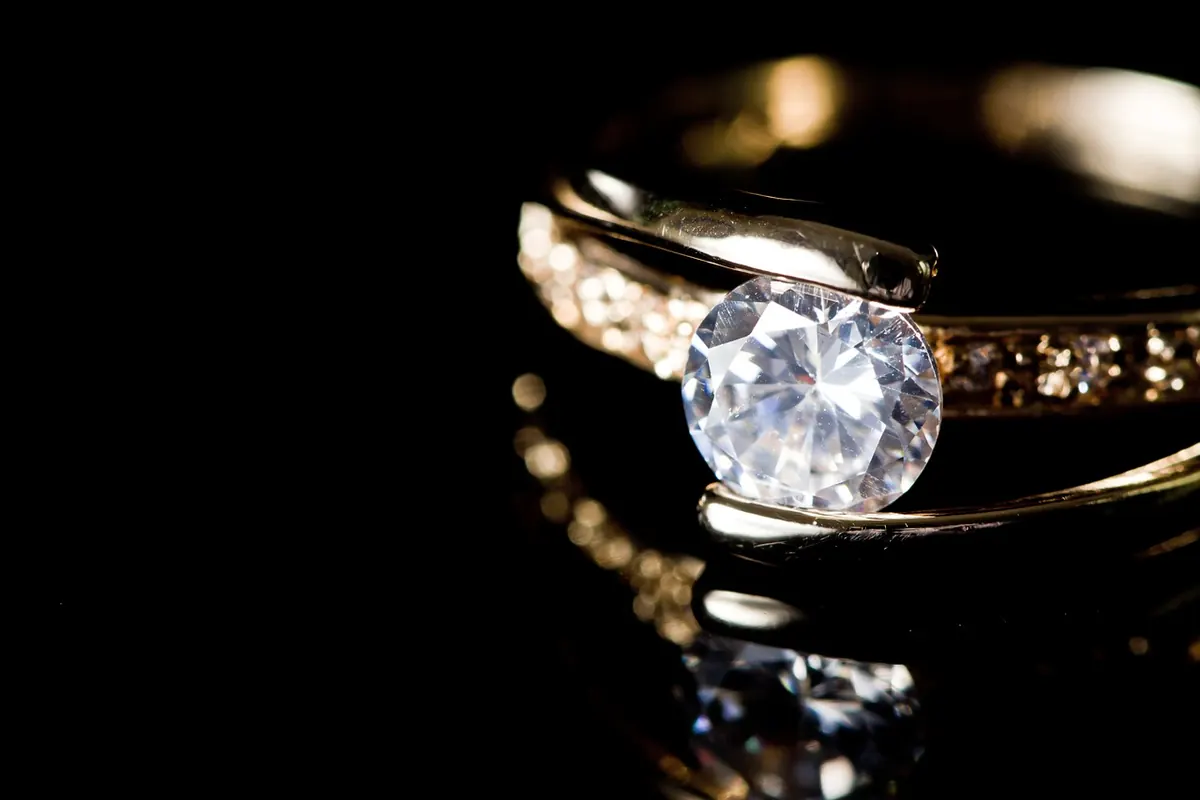
A solitaire is a single centre stone on a plain band. That's it. The setting itself is usually a claw setting — four or six metal claws holding the stone — or a bezel, where a rim of metal wraps all the way around the edge.
It remains the most popular choice for good reason. Nothing competes with the centre stone, the design works with almost any outfit, and your money goes into one good stone rather than being spread across a crowd of smaller ones. If you want the largest possible centre stone for a set budget, a solitaire is usually how you get it.
Claws, height and band width
Small decisions inside the solitaire category make a visible difference. Six claws look rounder and hold the stone more securely; four claws reveal more of the diamond but leave the corners more exposed. A cathedral setting lifts the stone higher, which suits people who like a traditional, prominent look. A low-set solitaire sits close to the finger and is far less likely to catch on knitwear, hair or gloves.
Band width matters too. A slim band of around 1.8mm to 2mm makes the centre stone appear larger, while a 2.5mm to 3mm band feels more substantial and tends to suit larger hands. Neither is better — it's a question of which looks right when it's actually on.
Halo settings: more sparkle, more presence
A halo is a ring of small stones circling the centre stone. It makes the centre appear noticeably bigger, which is why it's a favourite for smaller carat weights, coloured centre stones, or anyone who wants maximum sparkle from a moderate budget.
Variations are worth knowing before you shop. A classic halo sits at the same level as the centre stone. A double halo adds a second ring of stones for a bolder look. A hidden halo sits just below the centre stone, visible mainly from the side — a quiet detail rather than a statement. Floral and cushion-shaped halos give a softer, more vintage feel than a crisp round one.
Two practical points. First, match the shape of the halo to the shape of the centre stone; a round halo around a round brilliant looks intentional, while a mismatched pairing can look muddled. Second, halos mean more small stones and more edges to keep clean. A soft brush and warm soapy water every few weeks keeps the sparkle alive.
Trilogy rings: three stones with a story
A trilogy ring sets three stones in a row, usually with a larger centre and two smaller sides. Many couples like the symbolism of past, present and future; others simply enjoy the balance of the design, or use the side stones to represent children.
The side stones don't have to be diamonds. Sapphires, rubies or baguette-cut stones give a trilogy ring a very different character, and coloured sides are a smart way to add personality without altering the centre.
The main thing to consider is footprint. Three stones sit wider across the finger than a solitaire, which can look elegant on longer fingers and slightly crowded on shorter ones. Side stones that are very small can also look lost next to a substantial centre, so aim for a side stone size that feels deliberate. A jeweller can show you the proportions side by side, which is far more useful than guessing from photographs.
Other settings worth knowing
- Cluster: several smaller stones grouped to look like one larger stone. Strong sparkle, often good value, and a popular vintage choice.
- Bezel: a metal rim encircles the stone. Protective and snag-free, ideal for nurses, gardeners, gym-goers and anyone hard on their hands.
- Tension set: the stone appears held by the band pressure alone. Dramatic and modern, but it limits the stones and styles available.
- Pavé shoulders: small stones set along the band. Adds glitter from every angle; needs gentle handling and occasional tightening.
- Vintage or milgrain: fine beaded metalwork, engraved shoulders and antique-inspired shapes. Suits someone who wants character over minimalism.
- Toi et moi: two stones set side by side, often different shapes or colours. Romantic, unusual, and best tried on before committing.
Stone shape and metal change everything
The same setting can look entirely different depending on the stone and metal you choose. Round brilliants are the classic, with the most predictable sparkle. Ovals and pears elongate the finger. Emeralds and other step cuts look larger for their weight and give a calm, architectural elegance, though they show inclusions more readily. Cushions soften a design; marquise cuts are striking and best suited to hands that can carry the length.
Metals set the mood. Platinum is dense, bright white and needs no plating. White gold is a similar colour but often plated with rhodium to keep it bright, so it may need refreshing over time. Yellow gold feels warm and traditional, rose gold flatters most skin tones, and 9ct gold is generally harder-wearing than 18ct because of its higher alloy content, while 18ct has a richer colour. Visit a shop and hold the same ring in two or three metals against your hand — the difference is immediate.
Matching the ring to real life, and a real budget
- Think about hands and habits first. A high claw setting is beautiful and snag-prone. If the ring will be worn through manual work, a bezel or low-set design will be worn far more happily.
- Decide where the money should show. A solitaire puts it all into one stone; a halo spreads it. Lab-grown diamonds and moissanite are legitimate alternatives that free up budget for size or metal quality.
- Ask about resizing before you buy. Some bands and pavé designs are harder to resize than others. It's a fair question and worth asking early.
- Try on more than you expect to. Rings that look perfect online can sit awkwardly, and shapes you'd dismissed often look best on the hand.
- Plan for aftercare. Ask about cleaning, checking claws and any warranty, and consider a valuation for insurance purposes.
Buy the ring that suits the person, not the ring that photographs best on a stranger's hand.
Choosing with confidence
Most engagement ring decisions come down to three things: how the ring looks on the hand, how it will cope with daily life, and how much you want to spend. A solitaire gives you timeless simplicity and maximum stone for your money. A halo gives presence and sparkle. A trilogy gives width, balance and meaning. Everything else is detail — but detail is exactly what makes a ring feel like hers.
Take your time, try rings on properly, and ask questions until the answers make sense. If a purchase involves a significant sum, it's sensible to speak to a qualified jeweller or independent valuer about the stone, the setting and its insurance value before you commit.
Photo: Servetphotograph / Pixabay