An earring has two jobs: to look right and to stay put. Most of us spend a long time on the first and almost none on the second — until a favourite hoop ends up on a bus seat. The fastening does more work than it gets credit for. It decides how secure a pair feels, how quickly you can put them on when you are already late, and whether the earring tugs at your lobe every time you turn your head. Here is how the four most common types compare.
Butterfly backs: the familiar default
Butterfly backs — also called friction backs — are the small metal discs behind most stud earrings. Two curved plates grip the post as you slide the back down, and friction keeps it there. They are inexpensive, easy to replace and available almost anywhere that sells jewellery.
Security is moderate. The grip relies on tension, so a thin post, a worn back or a slightly bent plate will let the earring creep loose over a day. Comfort is good: the back sits flat against the lobe and disappears from view. Putting them on is quick once you are used to it, though the manoeuvre is awkward with long nails or if you cannot see behind your ear.
They suit studs, simple gemstone pieces and anything small and light. Check them by twisting the back gently; if it slides without resistance, swap it for a fresh one. Keep a few spares in your jewellery box — they cost pennies and save pairs.
Screw backs: the secure option
A screw back uses a threaded post and a small barrel that screws on, usually with a wider disc for comfort. You turn it several times to fasten, which takes longer but leaves very little to chance.
Security is the highest of the four. Once tightened, the earring will not slide off, which is why screw backs turn up on fine jewellery, sentimental gifts and pieces worn continuously for weeks rather than hours. They are also a common choice for children's first studs, since small hands find it harder to undo them.
Comfort is fine as long as you do not overtighten. The main drawback is speed and fiddliness — and thread care. Hand cream, hairspray and soap build-up stiffen the thread, so wipe the post with a soft cloth now and then rather than forcing it. If a post starts to cross-thread, stop and have a jeweller look at it.
Latch backs: built for hoops
A latch back has a hinged bar that swings through the piercing and clicks into a notch at the back of the hoop. You will find them on hoops, huggies and small drop earrings, and on many pairs that sit close to the lobe.
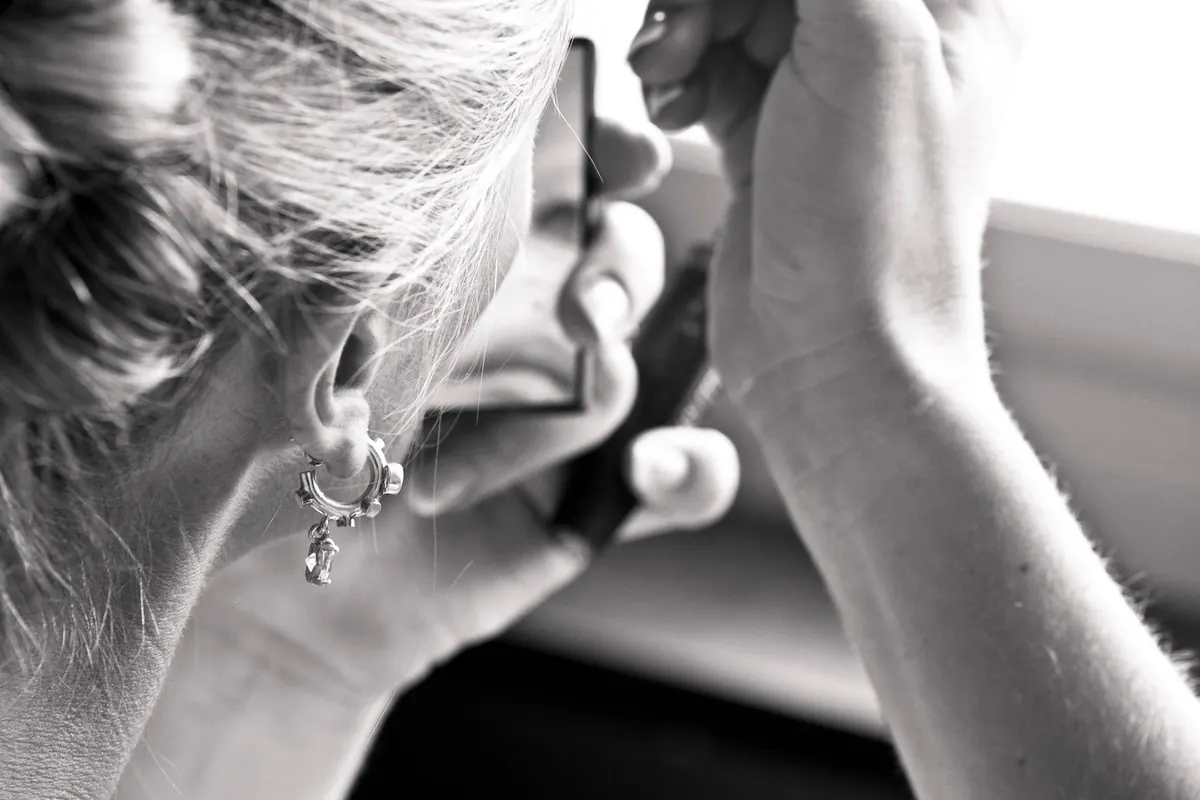
Security is high, because the bar has to be lifted out of its notch before the earring can move. Comfort is excellent — the closure sits flush and does not catch on collars or hair. Fastening is quick with a little practice, though you do need to line the bar up with the notch, which is easier in a mirror than by feel.
Over years, the hinge can loosen and the latch may pop open on its own. That is usually fixable: a jeweller can often tighten the mechanism rather than replace the earring, which is worth doing on a pair you love.
Hooks: light, simple, and slightly risky
Hook fastenings are open wires that pass through the piercing and rely on shape rather than a closing mechanism. They come in two main forms.
French wire and fishhook
This is a simple curve of wire that hangs from the lobe, held in place mainly by gravity and the weight of the earring. It is the easiest of all fastenings to put on one-handed, and the least likely to press on the back of the lobe, which many people with sensitive ears prefer. For lightweight drops and dangles, it looks elegant and feels almost weightless.
The trade-off is security. Long hair, a scarf, a coat collar or a long phone call can lift a hook straight out. Slide a small silicone or plastic stopper onto the end of the hook, behind the lobe, and you get most of the security of a closing back without losing the look.
Lever-back hooks
A lever back is a hook with a hinged lever that closes across the front, so the wire cannot slip out of the piercing. You get the slim profile of a hook with the grip of a latch. They are a good answer for drop earrings with a bit of weight, or for anyone who has lost one too many French wire earrings to a jumper.
Matching the fastening to the earring
A quick guide for the pairs you own or are considering:
- Everyday studs: butterfly backs for speed, screw backs if you wear them for days at a time.
- Fine or heirloom pieces: screw backs — the extra seconds are worth it.
- Hoops and huggies: latch backs, which sit flush and stay closed.
- Lightweight drops: French wire hooks, ideally with silicone stoppers.
- Heavier drops and dangles: lever-back hooks or latches for support.
- Physical work, scarves or long hair: screw backs or lever backs over open hooks.
- Sleeping and showering: remove earrings, or choose very low-profile studs.
Small habits that keep pairs together
Fit matters as much as type. A back should sit close to the lobe without pressing into it. If an earring leaves a red mark, feels tight or aches by the end of the day, adjust it or try a different fastening — a slightly longer post or a flat disc back can make a real difference. If a piercing becomes sore, swollen or weepy, take the earring out and speak to a pharmacist or GP rather than persevering.
Buy a small pack of spare butterfly backs and silicone stoppers. Clean backings occasionally, since product build-up loosens friction backs and stiffens screw threads. When you take earrings off, store them as pairs with the backs attached, so a matching set never gets separated. And if a latch or thread fails, ask a jeweller about a repair before you retire the pair — replacing a fastening is usually far cheaper than replacing the earrings.
Photo: Terje Sollie / Pexels